Begin with an engaging question: 'What do you think the ocean looks like from space?' Show a globe or a picture of Earth from space to illustrate the vastness of the ocean.
Go to the LessonLesson Plans
The Ocean
Learning Objectives
- Students will identify the ocean as a large body of salt water that covers most of the Earth's surface.
- Students will recognize that the ocean is home to a wide variety of animals, such as fish, whales, dolphins, sea turtles, crabs, clams, and shrimp.
- Students will understand that seagrasses are a type of plant found in shallow areas of the ocean and provide habitat for small sea creatures.
- Students will name additional ocean animals such as starfish, whales, dolphins, and seals.
Introduction and Hook
Read a short story about a day in the life of a sea turtle to capture students' interest and introduce the diversity of ocean life.
Direct Instruction
Explain the concept of the ocean as a large body of salt water covering most of Earth's surface. Use a map to show the ocean's expanse.
Introduce various ocean animals such as fish, whales, dolphins, and sea turtles. Discuss their unique adaptations to living in the ocean.
Guided Exploration
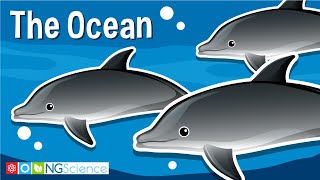
Watch the video 'The Ocean' to explore different habitats within the ocean and the variety of life forms. This video supports understanding of marine ecosystems and adaptations.
Discuss the role of seagrasses in providing habitat for small sea creatures. Show images or videos of seagrasses and the animals that live there.
Hands-On Activity
Create a simple ocean diorama using a shoebox, blue paper, and toy sea animals. This activity helps students visualize the ocean environment and its inhabitants.
Have students draw and label different ocean animals and plants they learned about, reinforcing their understanding of ocean biodiversity.
Independent Practice
Assign students to complete a worksheet where they match ocean animals to their habitats. This reinforces learning about ocean ecosystems.
Check for Understanding
Conduct a class discussion where students share what they learned about the ocean and its inhabitants. Encourage them to ask questions and clarify any doubts.
Review and Reflection
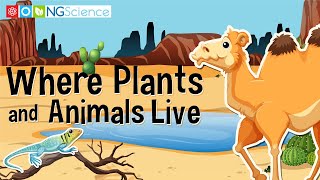
Review key concepts by watching the video 'Where Plants and Animals Live' to reinforce how different species adapt to their environments.
Reflect on the importance of the ocean and its ecosystems. Ask students to draw their favorite ocean animal and explain why it's important.
Assessment and Extension
Use the assessment 'How Are Animals Changing My School?' to evaluate students' understanding of animal-environment interactions.
Try the Quiz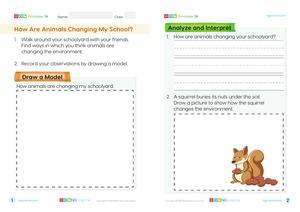
Extend learning by exploring the impact of pollution on ocean environments using the assessment 'How Does Pollution Change the Environment?'